
When a BEEPLE Robot Dog Poops You an NFT
At Art Basel Miami Beach this week I ended up with something surreal: a “memory” from BEEPLE’s Regular Animals installation – the Picasso-2 robot dog, print #621, paired with an NFT on Ethereum.
If you didn’t see it in person, Regular Animals is a herd of robot dogs with hyper-real masks of figures like Elon Musk, Jeff Bezos, Mark Zuckerberg, Picasso, Warhol – and BEEPLE himself – roaming the new Zero 10 digital art section at the fair. The dogs wander, snap photos, and periodically “poop” prints that can include QR codes linking to NFTs. Each robot reportedly sold for around $100,000, and the whole thing has been one of the most talked-about works at the fair.
It’s a perfect BEEPLE gesture: part satire, part spectacle, part serious commentary on how our view of the world is framed by tech platforms and algorithms.
For me, it’s also the perfect case study for something I’m obsessed with at Metapyxl
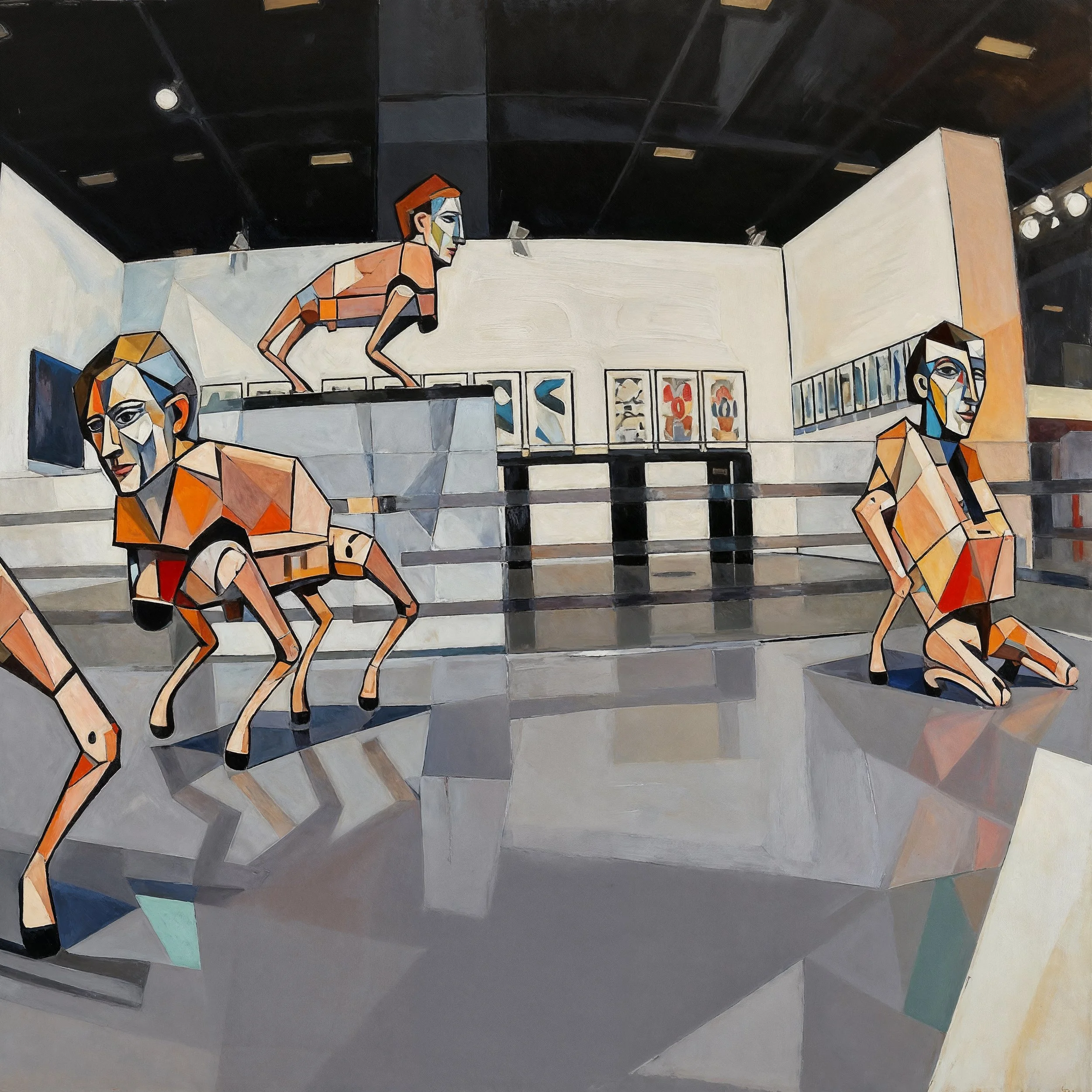
Picasso-2 robot dog, print #621, paired with a NFT 100 on Ethereum.
The problem we’re fixing: the file is still blind
NFTs were supposed to fix provenance. In practice, they mostly fixed “tokens”, not “media files”.
Once an image leaves a marketplace – screenshotted, right-clicked, saved, dropped into a gallery PDF, or fed into an AI training set – the link to the token, the creator, the license, and the “where to buy” path usually disappears. The file is visually recognizable but legally and economically “blind”.
That’s the gap we’ve been building at Metapyxl to close.
Our whole thesis:
“The artwork itself should carry its own truth – provenance, rights, and value – wherever it travels.”
My BEEPLE memory is the first NFT I’ve fully run through that system end-to-end.
---
What I actually did to the BEEPLE memory
In practice it was a simple workflow:
1. Pulled the NFT image into Metapyxl Vault
I used the same file that backs my OpenSea token (not a screenshot) and onboarded it into Metapyxl.
2. Locked BEEPLE as creator & copyright owner
I filled in his layer once – name, copyright, studio contact, website, socials – so the work always credits him first.
3. Added myself only as the collector layer
I recorded my Web3 wallet and the specific asset details:
- Regular Animals (2025) – “Beeple ‘Picasso-2’ Memory #100, Basel Miami”*
- Print edition: **621** (the physical card)
- NFT token: the OpenSea / Ethereum ID
You can see the token here:
4. Bound usage + value info to the file
Instead of yet another marketplace listing, Metapyxl stores clear “By BEEPLE” credit, basic usage notes, and links for where to buy or inquire – all tied to the image itself, not a single platform’s UI.
5. Issued a C2PA content credential and watermark
On export, Metapyxl:
- Attaches a “C2PA manifest” (so the file can be verified on tools like verify.contentauthenticity)
- Embeds a “forensic watermark” so we can still recognize and track the image if it’s screenshotted or edited.
If you want to see this in action, install Metapyxl Lens for Chrome and open the OpenSea link above – the whole provenance layer will appear on top of the image:
Metapyxl Lens (fully supported on Google Chrome, Brave and Perplexity’s Comet Browsers):
---
What “portable provenance” actually looks like
Here’s the part I care about more than the floor price:
- When you open the OpenSea listing in Chrome, Brave, or Perplexity’s Comet with Metapyxl Lens installed, you click the icon and see BEEPLE’s credit, description, rights info, and purchase path.
- When I place the same JPEG on metapyxl.com, Lens shows the same layer there too – same file, same provenance, different context.
- When you pull the file off-platform and drop it into the C2PA verifier, you see that a trusted manifest was issued, when, and by whom.
In other words:
> Whether you meet this NFT BEEPLE on OpenSea, on my site, or as a downloaded image, you’re not just looking at pixels – you’re looking at a file that can tell you who made it, what it is, how you can use it, and how to support the creator.
That’s what I mean by the artwork carrying its own truth.
---
Why this matters beyond one BEEPLE
Regular Animals is already about surveillance, power, and how tech reshapes our perception. The robot dogs wander through the fair collecting images and turning them into prints and NFTs – a literal factory of memories and future training data.
If those images circulate for years – in moodboards, presentations, AI models, or future retrospectives – we have a choice:
- They can become “dead assets”: files stripped of story, authorship, and rights, existing only as “that funny Elon robot dog pic.”
- Or they can stay “live”: carrying a durable thread back to BEEPLE, the work, and the collector history, with usage and value signals attached.
NFTs alone never quite solved that second problem. Tokens know who owns an entry on a ledger. They rarely help the rest of the world understand what a copied file actually is, whether it’s legit, and how to engage with it in good faith.
That’s the missing layer Metapyxl is built to provide – not just for headline-grabbing robot dogs, but for everyday photographers, publishers, galleries, and brands who need their work to be discoverable, licensable, and trustworthy across the messy, remix-heavy internet.
---
Try it yourself
If you’re curious, here’s a simple way to see this in action:
1. Install Metapyxl Lens for Chrome: https://chromewebstore.google.com/detail/okkmfghbgdklkjghedcafiahlfcgcean
2. Open to see my BEEPLE memory above using the lens or on OpenSea: https://opensea.io/item/ethereum/0x7a7b26ec72c8497fd068211979199044deeacc3b/100
3. Click the Metapyxl Lens icon and explore the “Content Snapshot,” “Trust & Usage,” and “Meet the Creator” tabs.
Same file. Same art. Just finally carrying its own story.
If Regular Animals is BEEPLE’s way of asking who controls the lens we see the world through, this little experiment is my answer: the lens should live
with the work itself. And we’re building Metapyxl so that any creator – not just BEEPLE – can give their files that kind of memory.